Detecting Helicobacter pylori in Food and Water
Written By: AnalytiChem |
How risk-based air monitoring supports zoning verification, trend analysis, and stronger EM programs.
In this article, you'll learn:
-
How H. pylori is transmitted, and why environmental routes face increasing scrutiny
-
Where the infection burden is highest globally, and why social conditions drive prevalence
-
How H. pylori behaves in water and food matrices, and what conditions support its survival
-
Why standard culture methods often fail with environmental samples
-
How PCR-based assays compare with culture media, and the limitations of each
-
Recommended detection strategies for food and water safety programs
The global burden of H. pylori and the conditions that drive it
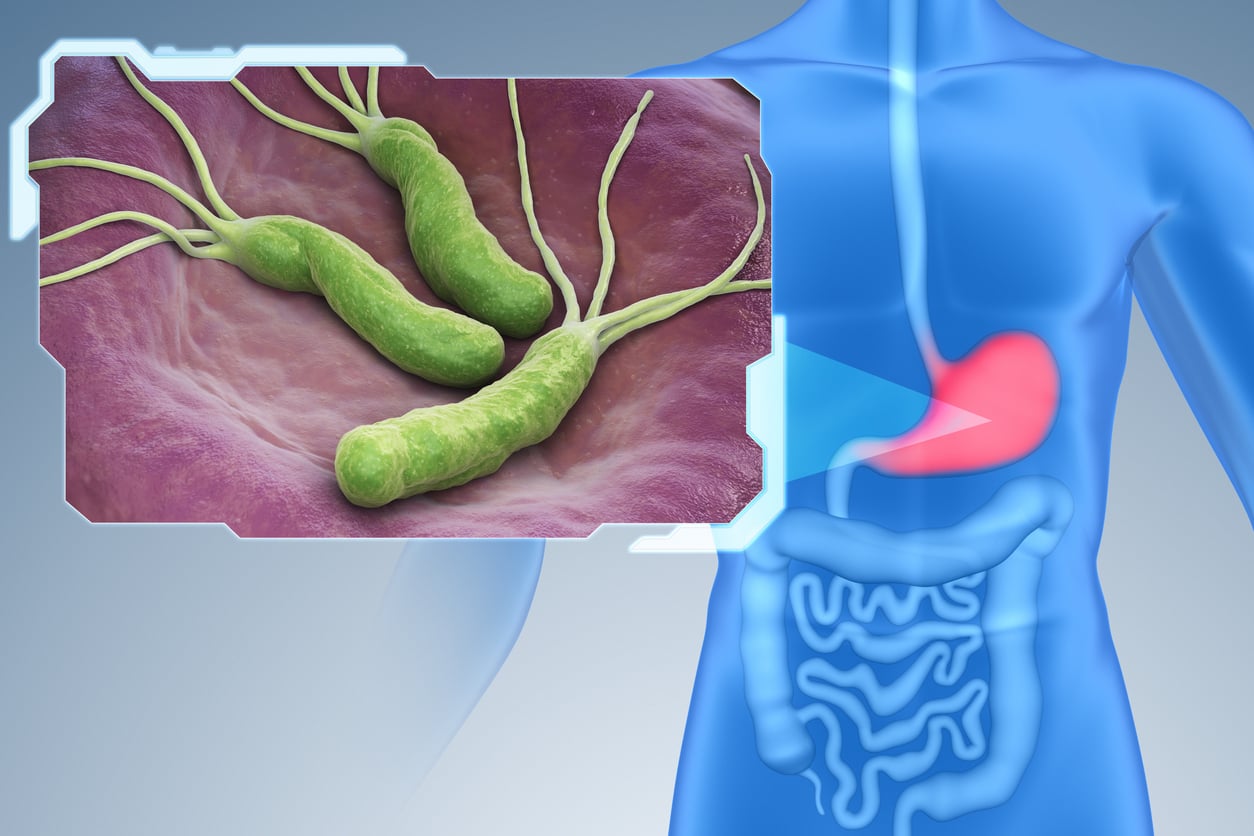
Helicobacter pylori (H. pylori) is a Gram-negative bacterium that colonizes the human stomach, and causes chronic gastritis, peptic ulcers, and gastric cancer. The World Health Organization (WHO) classifies H. pylori as a group 1 carcinogen.
With an estimated global prevalence of approximately 44% among adults — and higher still in many developing regions — H. pylori ranks among the most widespread human bacterial infections. Person-to-person transmission, primarily via the fecal-oral route, is the best-established pathway.
There's growing scientific evidence, however, that food and water can serve as indirect vehicles of exposure, particularly in settings where hygiene infrastructure is limited. Yet laboratory detection of H. pylori in food and water matrices remains technically demanding, with its importance widely underestimated in routine food safety programs.
Understanding H. pylori - detection, protection, and risk
For food and beverage laboratories, and reference laboratories involved in environmental and food safety testing, understanding how H. pylori survives outside the host, and how it can be reliably detected, is increasingly important to risk assessment and the protection of public health.
Most H. pylori infections are acquired during childhood. They can remain asymptomatic for years, or even decades. Those infected with the bacterium can act as long-term reservoirs without presenting any clinical signs; this makes population-level control difficult, and elevates the importance of environmental monitoring to public health.
Although most researchers regard food and water as secondary or opportunistic transmission vehicles rather than primary routes, the risk nonetheless exists. This is particularly the case in lower-resource settings, or where cold-chain integrity is compromised — a factor contributing to H. pylori's greater prevalence in lower socioeconomic areas.
Epidemiological data consistently show that prevalence of H. pylori tracks closely with sanitation infrastructure, housing density, and socioeconomic conditions. The strong association between infection rates, environmental conditions, and geographic prevalence underpins the scientific interest in water- and food-related transmission pathways for H. pylori.
How does H. pylori survive in water environments?
H. pylori is a fastidious organism under laboratory conditions, but displays a notable capacity for environmental persistence in water, particularly when conditions favor a low metabolic state. Survival is generally enhanced at low temperatures. Studies indicate that H. pylori can survive for 14 days at 4°C in nutrient-rich laboratory media, but only two days at 25°C, and less than one day at 40–42°C.
Counterintuitively, nutrient-poor environments can actually extend survival of H. pylori. Research shows that H. pylori stored in deep or natural seawater at 4°C retains better culturability than the same strain held in nutrient-rich media. This suggests that nutrient limitation and saline conditions promote morphological and physiological adaptations that extend H. pylori's viability. Survival is also generally greater in filtered water compared with untreated water, where competing microflora and other environmental stressors accelerate cell death.
Molecular studies have detected H. pylori DNA in a wide range of water sources, including rivers, lakes, groundwater, and biofilms within distribution systems, as well as in both treated and untreated drinking water. Critically, biofilms and free-living amoebae may protect H. pylori from disinfection, allowing persistence even when standard fecal indicator organisms such as Escherichia coli are absent.
This decoupling of H. pylori from conventional indicators is potentially significant for drinking water safety assessments. This is part of the reason why the US Environmental Protection Agency (EPA) has included H. pylori on its Contaminant Candidate List (CCL) since 1998, recognizing it as a potentially waterborne pathogen of public health concern that is not yet covered by a mandatory regulatory framework.
In adverse conditions, H. pylori can also transition into a viable but non-culturable (VBNC) state, where cells remain metabolically active, but can't be recovered using standard culture techniques. Studies in natural freshwater environments confirm that H. pylori can maintain viability in the VBNC state even as culturability is lost. This has direct public health implications, as VBNC cells may retain potential to contribute to infection, although their role in human transmission is still under investigation. As with Legionella detection and enumeration in water systems, selection of culture media products effective in the detection of H. pylori is critical.
How does H. pylori behave in food matrices?
Detecting key foodborne pathogens in food is challenging. Research into H. pylori in food has focused primarily on raw milk and other dairy products, meat and poultry, raw vegetables and salads, ready-to-eat (RTE) foods, and seafood and shellfish. Raw milk and minimally processed vegetables are of particular interest, as they undergo little or no thermal treatment, and may be exposed to contaminated water or cross-contamination during handling.
H. pylori is generally not considered to multiply in food, but experimental contamination studies confirm that it can survive for several days under refrigerated conditions. Its survival is prolonged in low-acid, high-moisture foods: H. pylori has been shown to persist for 9–12 days in pasteurized and UHT milk stored at 4°C, for several days on fresh vegetables such as lettuce, spinach, and carrots, with limited but measurable survival in fermented or acidic foods such as yogurt.
Evidence that contaminated food causes H. pylori infection in humans remains limited. However, multiple converging lines of evidence support biological plausibility: H. pylori DNA has been detected in a wide range of food matrices; survival under food-relevant conditions is well documented; epidemiological data associate infection with consumption of raw vegetables and unpasteurized milk; genetic similarity has been reported between isolates recovered from food, water, and human clinical specimens.
Given H. pylori’s tenacity, robust strategies for food testing and water testing are essential, but present particular challenges.
Why is H. pylori detection in food and water technically demanding?
Isolating H. pylori from environmental and food matrices is challenging. The organism's fastidious growth requirements, its microaerophilic atmosphere dependency (typically 5–10% O₂, 5–10% CO₂), its slow growth rate, and tendency to be present in low numbers against a background of competitive microflora, all compound the analytical challenge.
Culture-based methods using selective enrichment and plating media — including blood-based agars such as Columbia agar supplemented with sheep blood, Wilkins–Chalgren agar with sheep blood, and brain-heart infusion broth with supplements — remain relevant and are available for this purpose.
However, culture methods typically require incubation times of up to seven days, and sensitivity is often low when bacterial counts are minimal, or when the organism is present in the VBNC state — a common outcome in environmental samples.
PCR-based assays represent a widely-used alternative, offering high sensitivity through targeting of genes including 16S rRNA, glmM, ureA, vacA, and cagA. Their principal limitation is the inability to distinguish viable from non-viable cells: as PCR detects DNA rather than live organisms, residual genetic material from dead bacteria can generate positive results. There's a corresponding possibility of overestimating food safety risk if PCR is used as a standalone method.
Advanced detection strategies for complex matrices
To navigate the limitations of both culture and conventional PCR, several methodologies are increasingly applied in research and applied laboratory settings.
Immunomagnetic separation (IMS) combined with PCR can improve target recovery from complex matrices before molecular analysis. Nested and multiplex PCR approaches enhance analytical sensitivity. Viability-based methods — including reverse transcriptase PCR (RT-PCR), propidium monoazide quantitative PCR (PMA-qPCR), and direct viable count fluorescence in situ hybridization (DVC-FISH) — can differentiate intact, metabolically active cells from non-viable material, addressing the core limitation of standard PCR. Biofilm-focused sampling strategies are particularly important in water system monitoring, where biofilms represent a significant reservoir for persistent H. pylori.
International guidance and scientific literature often support PCR as a primary screening tool, followed by culture confirmation or viability-based assays where feasible — an approach that balances sensitivity with the meaningful interpretation of risk. AnalytiChem's range of prepared culture media products includes formulations specifically developed for this strategy.
Implications for food and water safety monitoring
H. pylori presents a genuine and under-appreciated challenge for food and water safety laboratories. Its ability to persist in environmental matrices, transition into a VBNC state that evades culture, and survive disinfection through association with biofilms and protozoa, means that standard indicator-based monitoring programs may not adequately capture the risk.
In higher-prevalence regions, and in any setting where raw water sources, unpasteurized dairy products, or minimally processed products enter the supply chain, targeted testing for H. pylori is an important precautionary measure.
For laboratories developing or reviewing monitoring protocols, the detection strategy needs to match the analytical context. Culture media products remain useful for confirmation and viability assessment, but low sensitivity in environmental samples limits their utility as a sole method.
PCR-based approaches offer the required sensitivity for screening, but should be interpreted cautiously without viability data. Combined or tiered methodologies — screening by PCR, confirmation by culture or viability assay — represent current best practice, and are broadly in line with WHO guidance.
Ultimately, the risk H. pylori poses through food and water is inseparable from the environmental and social conditions in which it thrives. Safe drinking water, effective sanitation, and robust food hygiene remain the most important preventive measures. For laboratories, the task is ensuring that detection strategies are sensitive enough to be meaningful, and interpreted effectively enough to be actionable.
AnalytiChem supports food and beverage laboratories and diagnostic and reference laboratories with prepared culture media and technical expertise across microbiological food safety and environmental monitoring. To discuss your H. pylori detection workflow, or explore the media formulations available for environmental and food matrix applications, contact our team.
Frequently Asked Questions
Is H. pylori subject to any regulatory monitoring requirements in food or drinking water?
In the US, the Environmental Protection Agency (EPA) includes H. pylori on its Contaminant Candidate List (CCL) — a register of unregulated contaminants in public water systems considered priorities for research and potential future regulation. The EPA recognizes H. pylori as a potentially waterborne pathogen, with well water usage and occupational soil contact identified as risk factors for infection. Despite this, H. pylori is not yet subject to a National Primary Drinking Water Regulation, meaning there is currently no mandated testing requirement for public water systems in the US.
In the EU and UK, no specific regulatory framework for H. pylori in food or water exists at the time of writing. The practical consequence is that monitoring programs are risk-led rather than compliance-driven, placing greater responsibility on laboratories and food safety teams to develop appropriate protocols independently. AnalytiChem’s expertise can ensure you implement a robust, effective strategy.
Does the antibiotic resistance profile of environmental H. pylori isolates have public health implications?
Yes, and this is an under-appreciated dimension of environmental H. pylori monitoring. Studies on isolates recovered from drinking water and ready-to-eat foods have documented significant resistance to antibiotics commonly used in eradication therapy, including clarithromycin, metronidazole, and amoxicillin.
Biofilm formation, which is relevant to H. pylori persistence in water distribution systems, is also shown to increase antibiotic resistance beyond the predictions of planktonic susceptibility testing. Some strains appear sensitive by standard minimum inhibitory concentration measurement, but resistant under biofilm conditions. If environmental sources contribute to human infection, they may also contribute to the circulation of resistant strains. This adds a further public health dimension to food and water monitoring beyond simple detection.
Can H. pylori be eliminated from a water distribution system once established in biofilms?
Complete eradication is difficult. H. pylori within biofilms is physically shielded from disinfectants, and can withstand conditions that would kill planktonic cells. The VBNC state further complicates assessment of an intervention's effectiveness, as standard culture would register a negative result even if viable cells remained.
Management therefore focuses on prevention: optimizing disinfection, controlling biofilm formation, maintaining distribution system integrity, and using molecular or viability-based monitoring to assess VBNC populations. Once established, H. pylori in a biofilm environment is best addressed through system-level hygiene controls rather than point-in-time disinfection alone.
What action should a positive H. pylori result in a food or water sample prompt?
This depends significantly on the method used. A PCR-positive result in isolation indicates the presence of H. pylori DNA but doesn't confirm viable organisms; follow-up with culture media or a viability-based assay is needed before drawing conclusions about infectious risk. A culture-positive result is more actionable, but may still underestimate the true load if VBNC cells are present.
In practice, a confirmed positive from a high-risk matrix such as raw milk, minimally processed produce, or source water, should trigger a review of hygiene controls, water treatment adequacy, and handling practices at the point of contamination, rather than immediate product action based on a single molecular result.
Subscribe to our blog