
Bacterial Screening of Platelets: Why Culture Media Design Matters
How sampling, timing and culture media design determine what a negative platelet screen actually...


In today’s high-stakes resource sector, whether mining for critical minerals or drilling for hydrocarbons, the margin between success and failure is increasingly defined by data quality and traceability. Laboratory analysis is no longer a post-facto box to check; it is a strategic pillar in optimizing every phase of resource extraction, from exploration to feasibility, and into production.
Understanding the mineralogical, geochemical, and elemental composition of a sample through laboratory methods informs key decisions about whether a resource is economically extractable, how it should be processed, and whether it meets regulatory and environmental thresholds.

The foundation of any reliable resource assessment begins with a rigorous quality assurance/quality control (QA/QC) program during early exploration.
Ultimately, a well-structured QA/QC program instills confidence in both technical teams and financial stakeholders by ensuring the data can be trusted.
Not all samples are created equal—and neither are the techniques used to analyze them. The selection of analytical methodology must be aligned with the composition, expected concentration ranges, and matrix effects of the sample in question.

X-ray fluorescence (XRF) is favored for its speed and non-destructive nature, especially in hand-held, portable formats. While ideal for high-concentration elements in rocks and soils, XRF may fall short in precision for trace-level detection.
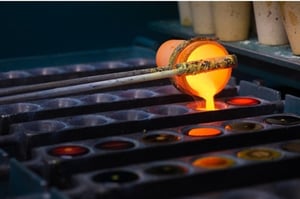 Fire assay, particularly when coupled with ICP-OES or ICP-MS finish, remains the gold standard for precious metals like gold and platinum. Its ability to extract and quantify ultra-trace levels ensures compliance with industry reporting codes.
Inductively Coupled Plasma (ICP) techniques, ICP-OES for mid-level concentrations and ICP-MS for ultra-trace—are pivotal in characterizing critical minerals such as lithium, cobalt, and rare earth elements. These techniques offer multi-element profiling with low detection limits, which is vital in evaluating the potential of polymetallic deposits.
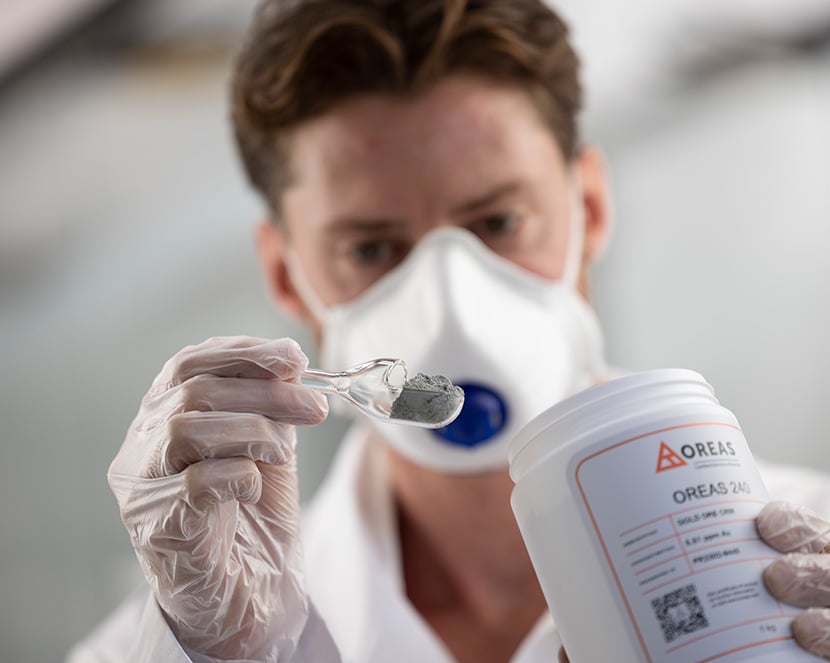
To achieve maximum analytical accuracy, particularly in comparative techniques such as XRF, ICP-OES, and fire assay, it is essential to use matrix-matched standards. These are reference materials that closely replicate the chemical and physical composition of the actual sample being analyzed. Without matrix matching, factors such as inter-element interference, particle size effects, and matrix-dependent signal suppression or enhancement can lead to significant analytical bias.
By calibrating instruments and validating methods with standards that mimic the real sample matrix, laboratories can minimize systematic errors and ensure that reported concentrations truly reflect the material’s composition. This practice is especially critical when working with heterogeneous geological samples or complex ore bodies, where standard calibration curves alone are insufficient for accurate quantification.
Ultimately, laboratory professionals must carefully consider matrix interference, detection limits, and sample preparation techniques to ensure analytical results are fit-for-purpose.

 Monitoring sulfur content is a critical part of maintaining refining efficiency and meeting global fuel specifications. CONOSTAN Sulfur Standards are:
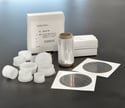 In XRF analysis, controlling contamination and preserving instrument integrity is essential for maintaining repeatable, defensible data in refinery environments.
Disposable XRF sample cups—available in single- or double-open-ended formats and compatible with most standard holders—provide clean, consistent sample presentation for both liquids and powders.
Thin films, offered as Easy-Snap sheets, pre-cut circles, or continuous rolls, support a wide range of application needs with thicknesses from 2.5 μm to 12 μm. With various materials available, including Mylar,® polypropylene and Etnom,® labs can select optimal film chemistries to minimize background interference and protect instrument components throughout continuous process monitoring.
Learn more XRF cells and thin film
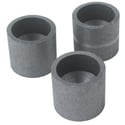 High-purity graphite crucibles play a central role in fusion-based sample preparation, helping laboratories generate precise analytical results even for complex refining matrices.
Their thermal stability, low impurity profile, and consistent performance support high-temperature workflows such as metals fusion, loss-on-ignition studies, and elemental determinations essential for process validation.
By ensuring clean, reliable digestion or fusion conditions, these crucibles contribute directly to the integrity of downstream XRF and ICP measurements—strengthening the analytical foundation refineries depend on for quality control and regulatory alignment.
 For ICP-OES workflows used to verify elemental composition in fuels, feedstocks, catalysts, and process streams, high-quality calibration standards are essential to achieving accurate, reproducible results.
AnalytiChem provides a broad range of single-element solutions alongside multi-element blends tailored to refinery-specific applications.
When unique composition requirements arise, custom formulations can be developed following a technical feasibility review—ensuring matrix-matched accuracy for even the most challenging samples.
These standards uphold method precision and support compliance with global industry methods, reinforcing the analytical confidence required for process optimization.
Request a Custom ICP Standard from AnalytiChem

As industries move toward cleaner, more efficient technologies, the materials they rely on must be validated with high confidence. From next-gen batteries to sustainable building materials, laboratory analysis underpins the development and scale-up of advanced materials.
Innovation in fields like battery manufacturing and green cement requires rigorous material characterization. Analytical techniques assess performance-critical features such as elemental composition, phase distribution, and thermal stability—ensuring materials meet both design expectations and regulatory standards.
By applying precise laboratory analysis during R&D and production, manufacturers gain the confidence to innovate while maintaining consistent quality.

In a circular economy, the ability to reclaim and reuse valuable materials depends heavily on data. Laboratory analysis plays a critical role in transforming waste into valuable feedstock, improving process efficiencies, and validating the purity and usability of recycled materials.
Recycling processes, particularly for EV batteries, Li-NMC cathodes, and automotive catalysts, demand high-precision testing. Techniques like handheld XRF enable on-the-spot material identification, supporting fast and reliable sorting.
Laboratory data ensures recycled materials are suitable for reintegration into manufacturing streams, closing the loop and minimizing reliance on virgin resources.
Accurate analysis starts with proper sample preparation. Recyclers often deal with diverse and complex matrices that require specialized methods such as acid digestion, microwave digestion, or digestion blocks to break down samples for elemental analysis. Investing in reliable sample preparation ensures downstream accuracy and actionable data.
Prevent costly failures with predictive and preventative maintenance strategies. In-service oil testing, RDE spectroscopy, and wear metals analysis (e.g., using Conostan standards) help identify early signs of equipment degradation, allowing timely interventions and maximizing asset lifespan.
 AnalytiChem’s Critical Material Recycling CRMs are matrix-matched to some of the industry’s hardest-to-source materials, including spent automotive catalysts for platinum (Pt, palladium (Pd) and rhodium (Rh), and also containing rare earth elements.
With full 100% composition transparency on every certificate of analysis, these CRMs provide the analytical confidence required to validate recovery efficiency and certify recycled material quality.
By supporting precise, traceable measurements, they help recyclers maximize the value of materials well beyond their first use-life.
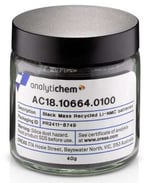 As EV battery recycling accelerates, reliable characterization of black mass is critical for ensuring high-value recovery of lithium, nickel, manganese, and cobalt.
AnalytiChem’s Black Mass CRM is sourced directly from real NMC battery waste, delivering true-to-life matrix matching that labs can trust.
This authenticity minimizes analytical bias and strengthens confidence in yield calculations, purity verification, and downstream processing decisions. By anchoring analysis to accurate reference materials, recyclers gain the data needed to reintroduce recovered metals back into production cycles—closing the loop on critical battery materials.
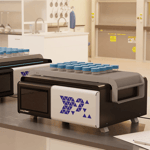 Effective recycling depends on breaking down heterogeneous, complex matrices into analyzable solutions.
The SNRG Block offers a streamlined hot-block digestion platform designed to deliver consistent, reliable sample breakdown for metals, catalysts, and battery waste.
By ensuring controlled heating and uniform digestion, the SNRG Block helps laboratories generate cleaner extracts, reduce prep variability, and improve measurement accuracy across techniques like ICP-OES and ICP-MS.
This dependable preparation step strengthens the integrity of every recycling dataset—supporting more informed recovery, sorting, and process optimization decisions.
 Trace-level accuracy is only possible when every step of the workflow is free from contamination. AnalytiChem’s high purity acids are engineered specifically for sample preparation in demanding recycling environments, ensuring no background contamination is introduced during digestion or dilution.
Their exceptional purity supports ultra-low detection limits in ICP and other elemental analysis methods, enabling recyclers to quantify valuable metals with confidence.
By protecting analytical integrity at the earliest stages of preparation, high purity acids play a critical role in validating reclaimed material quality and driving closed-loop material recovery.

How sampling, timing and culture media design determine what a negative platelet screen actually...

How aseptic process simulation confirms a hospital compounding process is truly sterile.
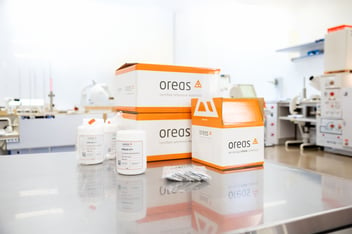
Eight Newly Released Certified Reference Materials We are pleased to announce the release of 8 new...