Your ICP Results Are Only as Good as Your Sample Preparation
Written By: AnalytiChem |
The upstream decisions that determine your ICP-OES and ICP-MS analytical performance.
In this article, you’ll learn:
-
Why sample preparation, not instrument performance, is the most common source of error in ICP-OES and ICP-MS analysis
-
Why upstream control often matters as much as instrument performance
-
How contamination and analyte loss are introduced through the choice of digestion vessel
-
What “ICP-MS grade” means for digestion vessel materials, and why the distinction matters at trace concentrations
-
How to reduce vessel-to-vessel variability and support compliance
-
How an integrated sample preparation workflow minimizes the variables between sample and result
What can go wrong before the sample reaches the instrument?
Sample preparation, not instrument performance, is the most common source of error in ICP-OES and ICP-MS analysis. Contamination, analyte loss, and volume inaccuracy introduced before the sample reaches the instrument typically have more influence on result accuracy than the instrument’s own calibration.
ICP-OES and ICP-MS are among the most widely used analytical techniques in environmental laboratories. ICP-MS can detect many metals at low concentrations under optimized method conditions, while ICP-OES is commonly used for higher-concentration trace and major-element work. At these sensitivities, there’s little margin for error upstream of the instrument.
Several factors can produce a result the instrument reports with confidence, but which doesn’t reflect the actual sample:
- Contamination introduced during digestion
- Analyte loss through adsorption to a vessel wall
- Volume errors from poorly calibrated tubes
- Particulates transferred during filtration
The instrument isn’t necessarily wrong; the sample it receives may be inaccurate.
Trace metal analysis in environmental laboratories sits at the intersection of high analytical sensitivity and regulatory consequence. Results are used to determine whether water supplies meet safety standards, whether industrial discharges comply with permits, and whether soils require remediation.
When sample preparation goes wrong, a laboratory risks a result that either understates a genuine exceedance, or triggers unnecessary remediation. Both carry cost and regulatory exposure well beyond the analytical run itself. Protecting against that starts with knowing exactly where in the workflow those risks are introduced.
Where errors actually enter the ICP workflow
Each step between collection and analysis is a potential source of error, but the digestion step — when the sample matrix is dissolved in acid to bring analytes into solution — is where the most significant contamination risks are concentrated. Vessel choice has the greatest impact on a result that a regulator, client, or plant manager will ultimately act on.
Digestion involves heating samples in concentrated mineral acids, typically nitric acid alone or in combination with hydrochloric or other acids, depending on the sample matrix and method, sometimes with hotplate-based digestion blocks or microwave.
At these conditions, the vessel in contact with the sample is no longer a passive container, but an active participant in the chemistry, introducing risk through three routes:
- Metal leaching from the vessel material into the acidic sample, contributing to the analyte signal.
- Analyte adsorption onto vessel surfaces, particularly at low concentrations, causing loss from the analytical fraction.
- Volume graduation inaccuracy, which throws off dilution calculations regardless of how precisely the instrument is calibrated.
These aren’t hypothetical risks — they’re the documented reasons why choice of digestion vessel matters at trace metal concentrations, and why the phrase “ICP-MS grade” applied to a vessel material carries a specific meaning that should be verifiable, not assumed.
What does “ICP-MS grade” mean in practice?
When applied to a digestion vessel, “ICP-MS grade” shouldn’t simply indicate a general quality designation, but material purity and low trace-metal background verified through analytical testing.
That distinction matters, because a vessel made from insufficiently controlled polypropylene can contribute measurable background contamination to the analytical blank, significant enough at low concentrations to affect the analyte signal.
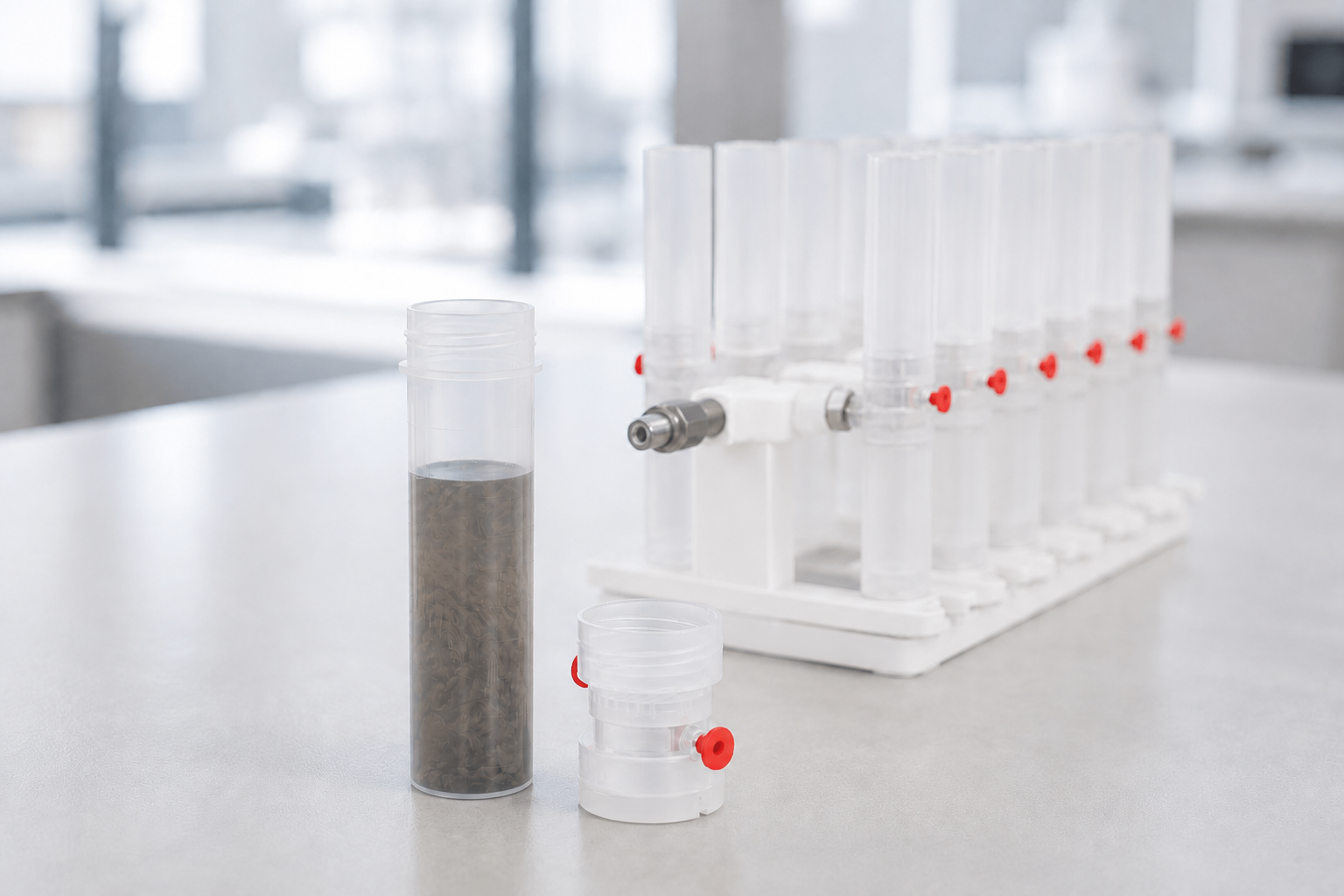
This is why AnalytiChem’s DigiTUBEs™ are manufactured from ICP-MS grade polypropylene, each lot tested for trace metal background across more than sixty-five elements using ICP-MS methodology. Results are documented in a lot-specific trace metal certificate prepared by an ISO/IEC 17025-accredited laboratory, which means the certificate reflects independently audited methods, not internal assessment.
This gives the laboratory actual background data for the vessel material used in a given analytical run, which is directly useful when blank elevations need to be investigated. Because certification is issued per lot rather than as a general product specification, laboratories have documented confirmation that each tested lot meets the stated trace-metal limits.
Volume accuracy is a related concern that’s sometimes treated as secondary to contamination control, but shouldn’t be. DigiTUBEs carry lot-specific Class A volume certification, giving laboratories documented volume control for digestion and dilution workflows. A volume error of 2–3% carries directly into the concentration calculation, and can’t be corrected after the fact.
Fewer transfers means fewer potential contamination events and one documented container throughout, rather than three separate vessels each carrying its own risk. And DigiTUBEs’ flat-bottom design supports stable contact with compatible digestion blocks and hotplate systems, promoting more consistent heating across a rack of samples when used with the appropriate block configuration.
Table: Traditional workflow vs. DigiTUBE
|
Factor |
Traditional workflow |
DigiTUBE workflow |
|
Vessels used |
Digestion vessel, volumetric flask, autosampler tube |
One DigiTUBE, start to finish |
|
Contamination opportunities |
Introduced at each transfer |
Eliminated |
|
Handling time |
Increases with each transfer |
Minimized |
|
Documentation |
Three separate containers to reconcile |
One documented container throughout |
From digestion to filtration: keeping the workflow closed
After digestion and cooling, the sample may require filtration before introduction to the ICP instrument, depending on the method and sample requirements. When filtration is appropriate, the integrated fit of AnalytiChem's DigiFILTERs and DigiTUBEs can help streamline this step.
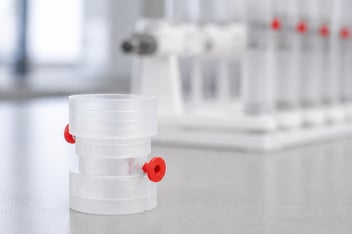
DigiFILTERs are designed to fit directly onto 50 ml and 100 ml DigiTUBEs, allowing filtration to proceed in the same vessel in which the sample was digested. No transfer is required between digestion and filtration. The digested, cooled sample passes directly through the DigiFILTER — housed in an ICP-MS grade polypropylene cap consistent with the tube material — into the receiving vessel for dilution and analysis.
As every vessel transfer offers potential for contamination or loss, eliminating transfer between digestion tube and filtration vessel removes such opportunity. For laboratories working at very low concentrations, where analyte adsorption to vessel walls is a genuine concern, this is a significant gain.
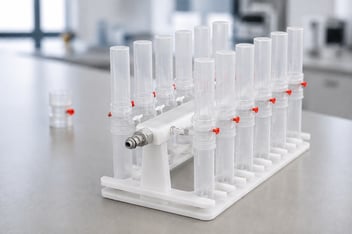
The DigiFILTER manifold extends this to batch processing: multiple DigiTUBEs loaded with DigiFILTERs can be filtered simultaneously under vacuum, with each sample in its own isolated fluid path. The full sample preparation sequence — digest, cool, filter — proceeds with a consistent set of materials, documented at lot level, from start to finish.
“Analysts spend a lot of time trying to eliminate avoidable sources of error. Reducing vessel transfers is one of the simplest ways to improve sample integrity because every additional handling step introduces risk without adding analytical value.”
Mitra Matloobi, Global Product Manager, ICP Consumables, AnalytiChem Group
A short animation covering our DigiFILTERs, DigiTUBEs, and showing the manifold in action, is available to view here.
Building a traceable sample preparation record
For laboratories operating under accreditation — ISO/IEC 17025, or sector-specific schemes — traceability of consumables used in sample preparation is part of the quality record. When a result’s questioned, the auditor or regulator will ask questions beyond how the instrument was calibrated, such as:
- What vessels were used?
- What certificates were held?
- Were the consumables appropriate for the analysis?
DigiTUBEs are available with both Class A volume certification and trace metal certification, both issued per lot from an ISO/IEC 17025-accredited laboratory with documented methods. These certificates allow a laboratory to demonstrate, for any given analytical run, exactly what vessel materials were in contact with the sample, and at what verified background levels.
As documentation requirements across the analytical chain attract closer regulatory attention, having that record for sample preparation — not just for the instrument — is increasingly part of what compliance looks like in practice. Set against that backdrop, an ICP-OES or ICP-MS result is only ever as good as the sample preparation behind it, and the vessels, certificates, and workflow decisions made long before the sample reaches the plasma are what determine whether that result can be trusted and defended.
To learn more about AnalytiChem’s range of filtration products, read the other blogs in this series, Why Filtration is the Step Your ICP Results Depend On and How to Choose the Right Filter Membrane for Trace Metal Analysis, explore our literature library, or contact our team to discuss your specific requirements.
Frequently Asked Questions
Can DigiTUBEs replace volumetric flasks for making up to volume after digestion?
Why does accreditation of the testing laboratory matter for the trace metal certificate?
How do I know if background contamination in my analytical blanks is from the digestion vessel?
Are DigiTUBEs compatible with common digestion block systems?
Subscribe to our blog